
Let’s take a look back at a conflict that once occurred at Lotte, a South Korean conglomerate. Although it happened more than a decade ago, the hard-learned lessons it holds are still relevant today.
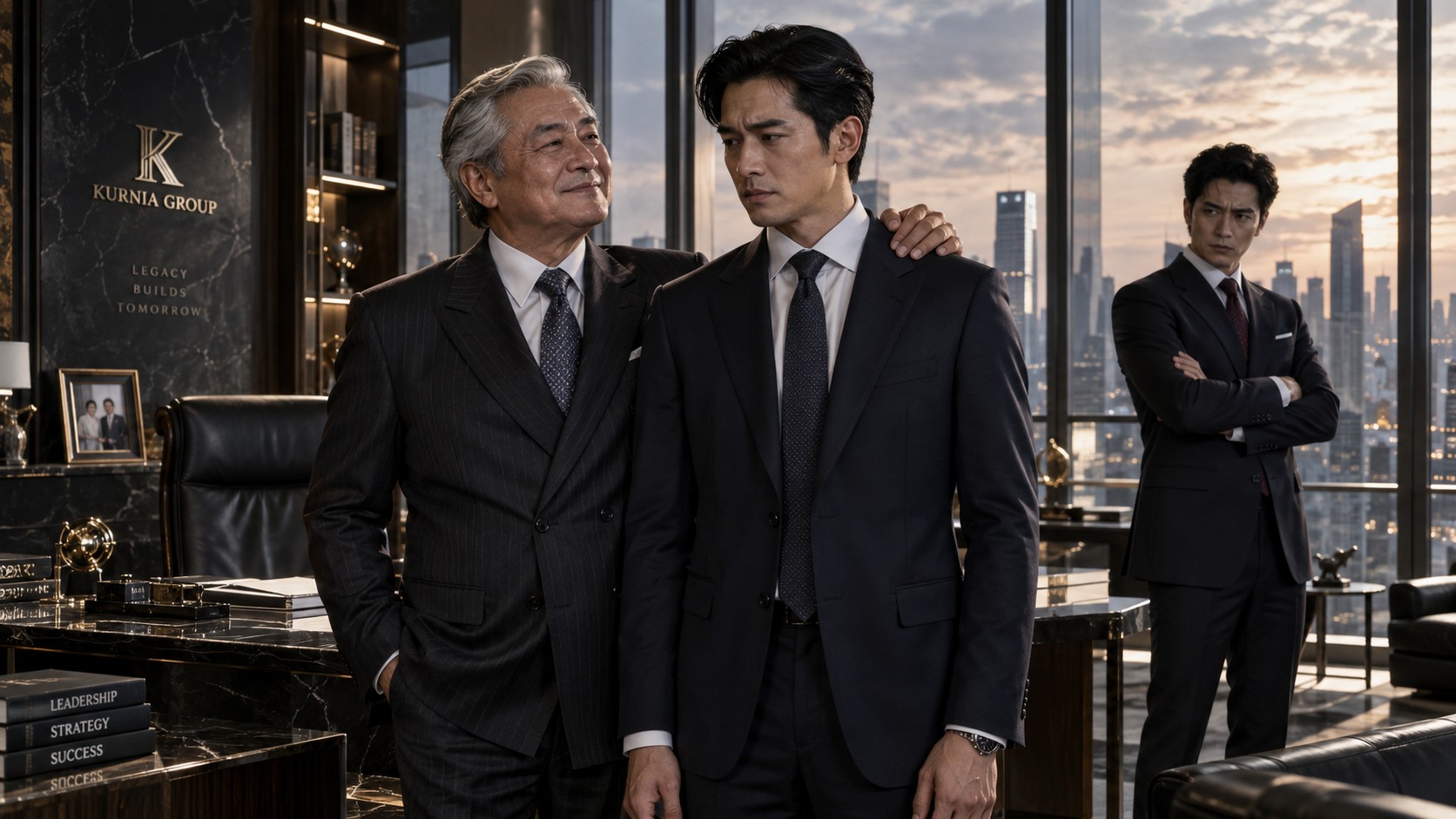
If the turmoil at Lotte were likened to a drama, then Shin Kyuk-ho, the founder, would be both the protagonist and the antagonist. He is called the protagonist because it is thanks to him that Lotte has become the conglomerate it is today. He is called the antagonist because he is the source of the family’s turmoil. He tried to oust his own son from the top executive position at Lotte. However, in the end, he himself was the one who fell from grace. His eldest son, Shin Dong-joo, once revealed secrets and anecdotes about his family in an interview. Dong-joo said that his father was truly the king of kings at Lotte, even when he was ninety years old. Just imagine—he could slap his 60-year-old son, fire a top executive with a mere snap of his fingers, and demand that everyone report to him, even on the most trivial matters.
Kyuk-Ho’s obsession with control and power was, as it turns out, nothing out of the ordinary. In the past, he often got into arguments with his siblings. When he first founded Lotte, he worked closely with his siblings. However, as time went on, he realized the importance of having total control over the company. His abrasive personality often sparked conflicts that could have been avoided.
Kyuk-Ho’s obsession with control and power was, as it turns out, nothing out of the ordinary. In the past, he often got into arguments with his siblings. When he first founded Lotte, he worked closely with his siblings. However, as time went on, he realized the importance of having total control over the company. His abrasive personality often sparked conflicts that could have been avoided.
The most famous was his feud with his own younger brother, Shin Choon-Ho. The animosity between the two brothers erupted after Kyuk-Ho asked Choon-Ho to stop using the Lotte brand for his business—which sold instant noodles and was then known as Lotte Industrial. In 1978, Choon-Ho changed the name of Lotte Industrial to Nongshim and began producing Shin Ramen and other brands, which later achieved worldwide success. However, Choon-Ho subsequently severed ties with his older brother. To Choon-Ho, the feud between Kyuk-Ho and his son meant nothing. In other words, he no longer cared.
Shin Joon-ho, Kyuk-ho’s youngest brother, initially worked as Kyuk-ho’s right-hand man. Joon-ho served as CEO of Lotte Ham, Lotte Milk, and other companies. In 1996, the two brothers were involved in a legal dispute over ownership of a prestigious piece of real estate in Yangpyeong-dong, Seoul.
In 2004, Joon-ho single-handedly acquired Daesun Brewery. In 2007, he was granted management rights to Lotte Milk. However, the name Lotte Milk later had to be changed to Purmil after Kyuk-ho ordered Lotte Milk to change its name.
Their younger sister, Shin Jung-hee, didn’t want to be “outdone” either and once had a falling out with Kyuk-ho. He ordered Jung-hee to change the name of Lotte Tour. Jung-hee ran Lotte Tour together with her husband, Kim Ki-young. However, Jung-hee’s relationship with Kyuk-ho wasn’t as strained as her older siblings’ was.
Lotte’s story illustrates the paradox of family businesses: people who are supposed to be partners in building shared wealth can actually turn into adversaries when power, ownership, and pride clash.
More Than Just a Family Matter
There is a perception that family businesses have a natural advantage due to trust, loyalty, and shared goals. This perception is not entirely wrong. Family ties can speed up decision-making, strengthen long-term commitment, and make family members willing to make sacrifices for the sake of the business’s survival.
However, family ties do not automatically lead to harmony. In fact, that closeness can actually exacerbate conflicts because business matters become intertwined with emotions, the history of relationships among family members, and long-standing expectations.
In non-family-owned companies, disagreements between directors and shareholders can generally be discussed and resolved through governance mechanisms. In family businesses, similar disagreements can spill over into far more personal issues. Criticism of business decisions is viewed as defiance. Questioning strategy is interpreted as disloyalty. When a child defies his father’s will, the issue is no longer merely the soundness of the decision, but also respect for one’s parents. The child may even be labeled as disobedient.
This is where conflicts in family businesses become complicated. Issues that appear to be related to the company are actually rooted in the need for recognition, a sense of being treated unfairly, sibling rivalry, or the fear of losing one’s position.
As a result, issues that could have been resolved rationally turn into emotional battles. Business decisions are no longer determined by the question of what is best for the company, but by who must win and who must not win.
When the Founder Becomes the Center of Everything
One of the most common sources of conflict is the founder’s inability to distinguish between ownership and control.There’s no denying that many founders build their businesses through hard work, sacrifice, and a willingness to take risks. Their businesses become part of their identity. Business success feels like personal success, while criticism of the company can feel like criticism of themselves.
In the early stages, centralizing power may actually be helpful. Founders know their customers, understand their products, and are able to make decisions quickly. However, as the company grows, this same leadership style can actually hinder progress.
Organizations need systems, a division of authority, and leadership development. If every decision must await the founder’s approval, the company will no longer be able to respond nimbly to changes in the environment. Furthermore, if all family members must comply without any opportunity for dialogue, the next generation will never truly have the chance to learn how to lead.
The problem isn’t simply that the founders want to hold on to power. The issue also lies in a system that allows that power to lack clear boundaries.
When formal authority is not distinguished from personal influence, a company becomes vulnerable. Leadership transitions turn into power struggles. The appointment of a successor is perceived as a threat by other family members. Even decisions that are not supposed to be strategic in nature can trigger prolonged conflicts because there are no mutually agreed-upon rules.
Conflict Isn’t Always Destructive, But It Must Be Managed
Are conflicts in family businesses always bad? No. Differences of opinion can pave the way for innovation, correct wrong decisions, and push the company to break out of outdated ways of thinking.
Constructive conflict focuses on the issues: which strategy is more appropriate, how to manage competencies, or how to best utilize profits. Destructive conflict attacks individuals, dredges up past mistakes, and uses authority to punish those who hold differing opinions.
Therefore, family businesses require governance that not only manages the company but also the family’s relationship with the company. Written rules alone are certainly not enough. Families must cultivate a culture of dialogue, a willingness to listen, and the ability to accept that other family members may have different perspectives. In certain situations, an independent facilitator or professional mediator can help break through communication deadlocks.
#Lotte #family business #Shin Kyuk-ho #founder #Shin Dong-joo #Shin Choon-Ho #conflict #system #formal authority #governance