
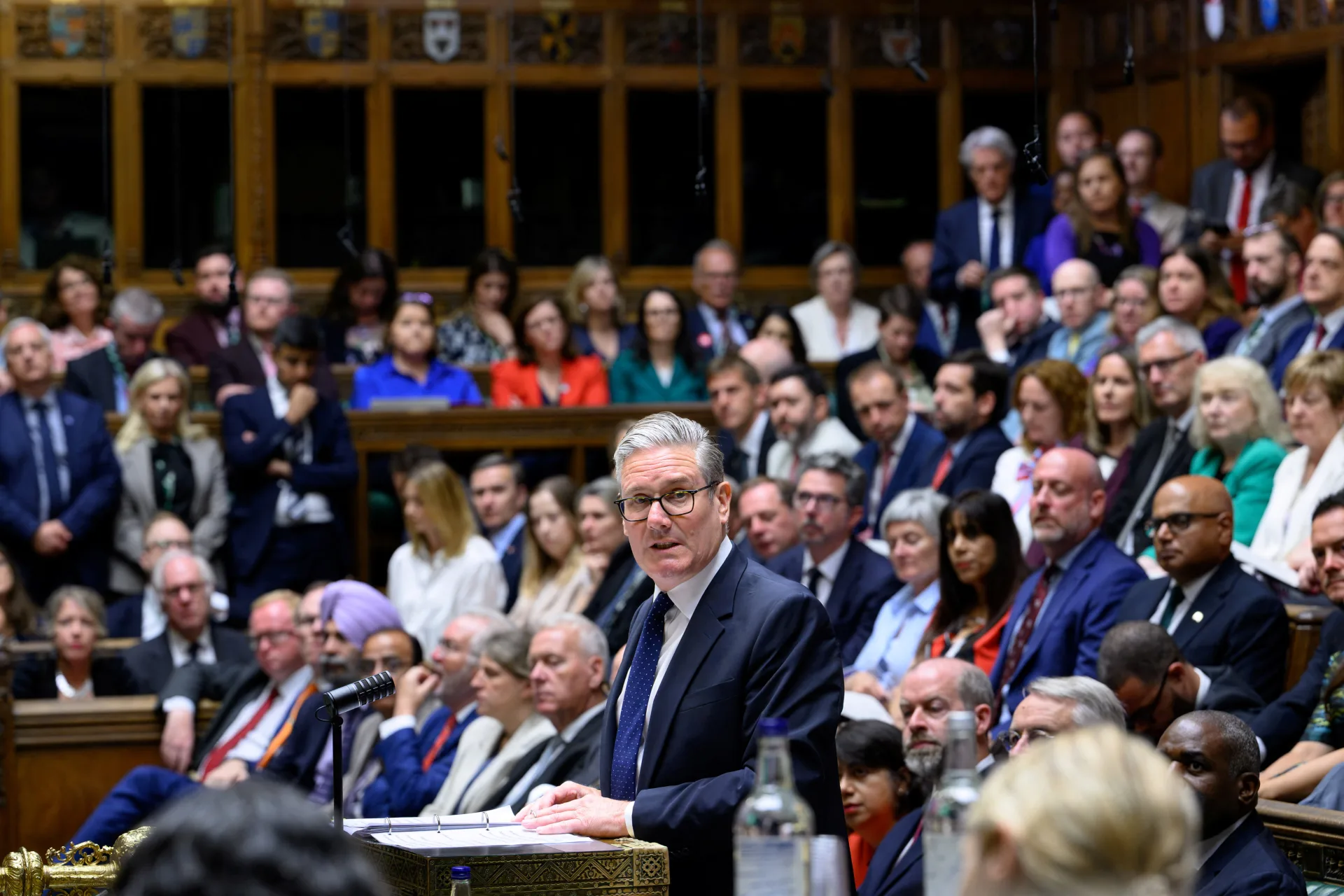
Over roughly the past decade, the United Kingdom has been led by seven prime ministers: David Cameron, Theresa May, Boris Johnson, Liz Truss, Rishi Sunak, Keir Starmer, and now Andy Burnham. For many observers, an obvious question arises. How can a country carry on functioning normally when its leadership changes hands so often and so quickly?
The same question echoes through the corporate world. Some corporate giants keep performing even as the top seat passes from one CEO to the next. Plenty of other organizations collapse the moment their founder or charismatic leader walks away. The contrast raises an interesting paradox: does the stability we see on the surface reflect genuine resilience, or is it just a mask over the turbulence underneath?
Look closely and it becomes clear that institutional steadiness, of the kind seen in governments across developed countries like the UK, does not appear out of nowhere. Schools stay open, taxes keep being collected, and hospitals keep treating patients. This happens not because the leader is personally attending to everything, but because an invisible operating system is working behind the scenes. That system is made up of a professional bureaucracy, an organizational culture, the rule of law, and deeply rooted routines and norms. Leadership is the tip of the iceberg, not the whole of it. Changing the pilot mid-flight is hardly a trivial matter, but navigation systems, air traffic control, technical standards, and a trained cabin crew will keep the aircraft flying smoothly even when one person steps out of the cockpit.
In a mature institution, the office gradually becomes far more important than the person occupying it. Central banks are a good example. Governors change, yet the monetary policy framework stays relatively consistent because it is underpinned by capable economists, a legal mandate, and robust historical data. The same holds for successful corporations with documented operating procedures, a responsive middle management, succession planning, and a strong internal culture. On that kind of foundation, every leadership transition unfolds as natural evolution rather than a revolution that consumes everything in its path.
One of the most decisive factors in this resilience is the role of the middle layer. Beneath the shadow of the CEO or the prime minister sit experienced managers and professionals who translate strategic vision into daily action, solve problems before they ever reach the top, and keep the operational wheels turning. They are the organization’s shock absorbers. Without them, every change at the top would send a serious tremor through the system. Ironically, great leaders often collect the credit for successes actually carried by systems inherited from their predecessors, while weak leaders can survive far longer than they should because a strong institution keeps quietly patching over their shortcomings.
Yet we should not be lulled by calm on the surface. Behind operational stability, a quiet erosion is often underway: sagging morale, deferred investment, blurred strategic focus, unresolved internal conflict. It usually takes a crisis to pull back the curtain. The British government is a case in point. Its bureaucratic machinery never stopped running, yet many analysts have highlighted weakening policy continuity, reforms left in limbo, and a decline in business confidence over a period of frequent leadership change. Operations remained stable, in other words, while the strategic pulse began to fade. The same thing happens in companies when innovation and employee engagement are slowly worn away without customers noticing a thing.
None of this means institutional reliability makes leaders irrelevant. Systems guarantee continuity. Leaders determine direction. Think of a reliable train running on well-maintained track: the track keeps it moving, but it is the driver who steers it toward its destination.
That is why organizations can survive years of merely average leadership, and why they truly take off in the hands of a leader who is genuinely capable. A strong system prevents collapse. Strong leadership drives progress.
There is another valuable lesson here, and that is the founder trap. Many founders, particularly in family businesses, unwittingly build a palace on personal dependence. Employees will not decide anything without approval. Customers trust only the founder. Critical knowledge lives in a single head. Business relationships rest on personal bonds rather than institutional contracts. Everything looks perfect, right up until the founder is gone. That is the moment they realize what they built was not a resilient company but a fragile dependency, one that turns succession into the biggest threat of all.
The mark of a truly great leader, then, is the ability to make themselves replaceable. Such a leader deliberately builds a system stronger than they are: developing leadership at every level, documenting knowledge, establishing clear governance, and instilling a culture rooted in shared values rather than blind loyalty. When they eventually step away, the organization does not wobble. It keeps growing on the foundation they laid.
So when we see a country or a corporation standing firm despite frequent changes at the top, let us resist the easy conclusion that leaders do not matter. Let us ask a better question instead: has this organization built an institutional foundation strong enough to preserve continuity, while still leaving each new leader room to shape the future? That is the defining trait of mature leadership, the kind that creates institutions whose greatest strength lies not in the incumbent leader, but in a system that stays alive long after that leader is gone.
#UK #primeminister #leadership #systems #middlemanagement #institutions #continuity #foundertrap